Official technical document

APT-CasinoLitepaper

Multichain GambleFi with provably fair games, gasless play, and APTC — a transparent value loop from wagers to buyback, burn, and staking.

v1.0.0·Updated 2026-05-19

At a glance

Live chains

Solana · Aptos

Core games

Plinko · Mines

Roulette · Wheel

Platform fee

10% deposit / withdraw

GGR → APTC

30% buyback · 50% burn

Media

Deck & advisory

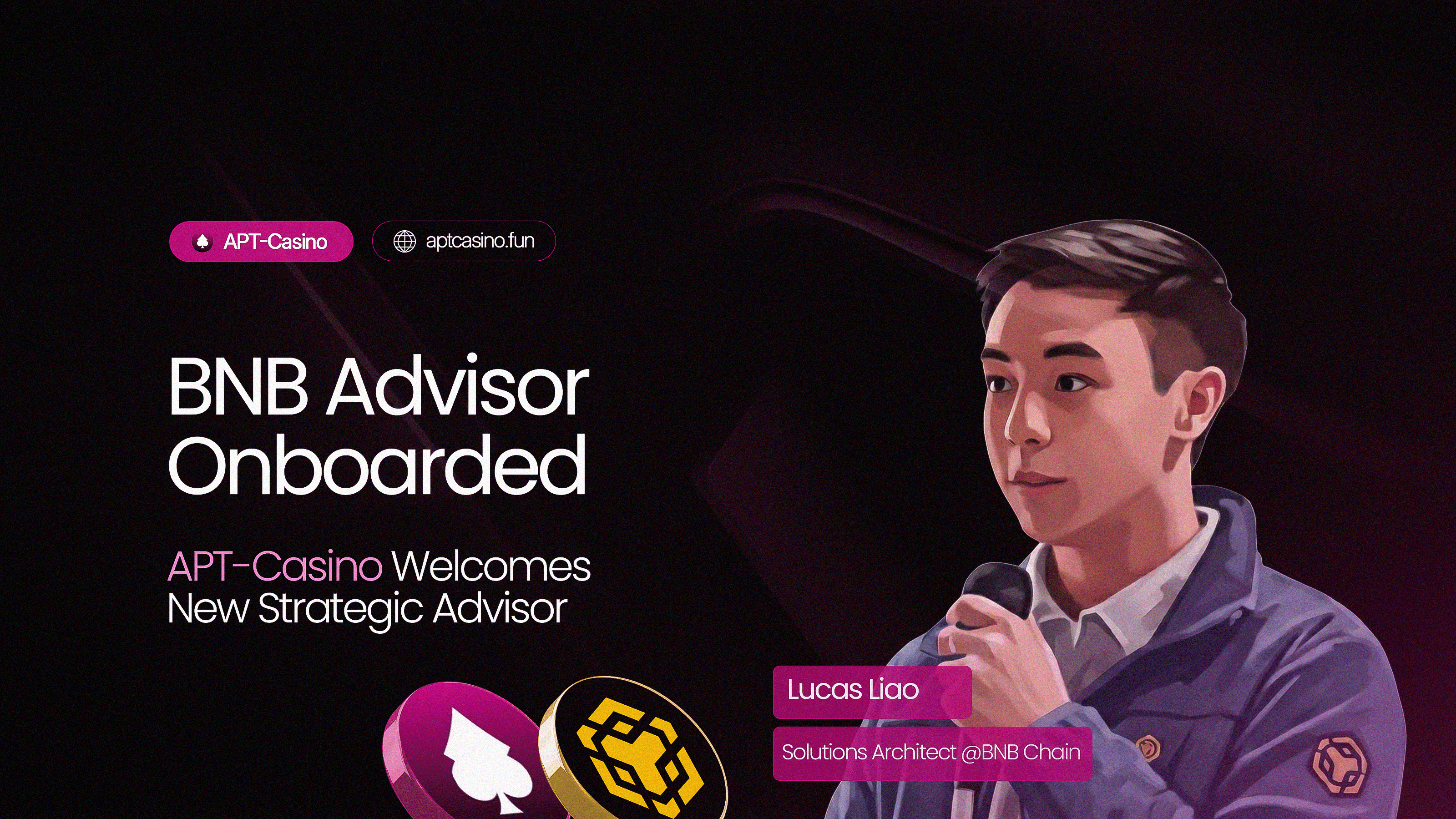
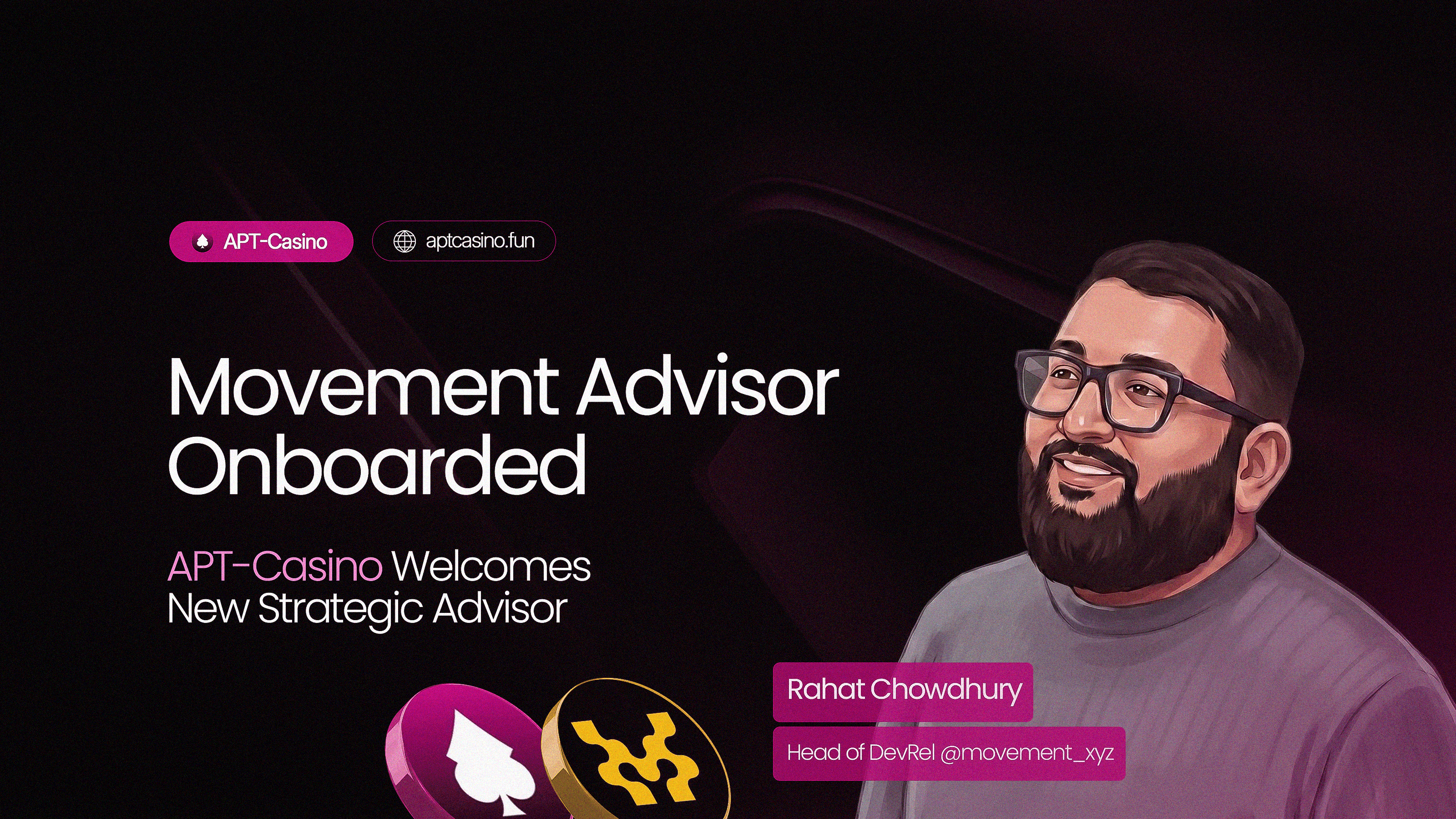
Advisory

Advisory boardConfirmed

Ecosystem advisors and partners — see homepage for full logo grid.

Visual reference

Protocol diagrams

Interactive Mermaid charts — pan, zoom, and drag inside each panel.

End-to-end player journey

Deposit → play → settle → optional withdraw & share proof

Rendering diagram…

APTC value loop

GGR funds market buyback, then burn · stake · treasury

Rendering diagram…

Web2 casino vs APT-Casino

Why transparent rails matter

Rendering diagram…

Applied for

Accelerators & programs

APT-Casino has applied to the following incubators and residency programs.

Context & Strategic Premise

1

Protocol Thesis

APT-Casino is a multichain GambleFi platform that treats casino play as verifiable, on-chain probabilistic compute — not opaque server-side RNG.

The product combines provably fair games, gasless UX, house ledgers per chain, and an APTC token layer that routes protocol revenue back to players through buyback, burn, and staking.

Live chains today: Solana and Aptos (Move contracts + aptos_framework::randomness on Aptos). Sui, EVM, and Starknet are registered as coming soon in the chain registry.

Design objective: Web2-grade onboarding (keyless Google/Apple + Petra) with Web3-grade transparency — every bet, deposit, and withdrawal is auditable.

1A

Origin Story

APT-Casino was born after a firsthand experience with legacy online casinos: misleading bonus terms, hidden wager limits, and custodial balances that trap users.

The founder deposited into a major Web2 platform, received a 200% bonus, then discovered bets were capped at $1 and withdrawals required tens of thousands in play-through — classic opaque house rules.

That frustration became a product mandate: no hidden wager traps, no rigged outcomes, and no custodial lock-in. Players own their assets and can verify fairness on-chain.

The platform evolved from an Aptos hackathon project into a multichain product with live play on Solana and Aptos, APTC economics, live streaming, and community programs (referrals, volume cups, OTC lottery).

2

Problem & Motivation

Traditional online gambling is centralized: opaque RNG, high fees, restrictive withdrawals, misleading bonuses, and no true asset ownership.

Web3 adoption friction remains high — wallet setup, gas, and transaction confirmations scare Web2 users away from decentralized alternatives.

Social layers are missing on most crypto casinos: no integrated live streaming, limited chat, and no shareable proof of wins/losses for community growth.

APT-Casino targets this gap with provably fair games, treasury-funded gasless play on Aptos, per-chain house balances, and transparent fee economics published in env/config.

3

Scope & Product Surface

Games (live): Plinko, Mines, Roulette, Spin Wheel — each with configurable risk, multipliers, and on-chain or server-verified outcomes depending on chain.

Multichain play: Solana (server house balance) and Aptos (client balance mode + Move modules). Chain switcher in navbar follows PLAY_CHAINS registry order.

Social: Livepeer-powered /live streams, Socket.IO wallet-signed chat, leaderboards, Volume Cup competitions, and ROI share links on withdrawals.

DeFi surfaces: Stake (APTC staking pools), referral APTC rewards with cliff unlock, OTC lottery (SOL → APTC, lock period), and GGR-driven APTC buyback dashboard.

Wallet UX: Google/Apple keyless login, Petra wallet, and gasless Aptos transactions sponsored by treasury relayer — users play without signing every micro-action.

Diagram

Rendering diagram…
Architecture & Fairness

4

System Architecture

APT-Casino is a Next.js application with chain-specific API routes under /api/chains/{chainId}/, Supabase for profiles, balances, referrals, and audit logs, and Move contracts on Aptos for core game logic.

Sensitive writes (deposits, withdrawals, referral unlocks, GGR estimates) run server-side with service-role Supabase and validated env economics — never trusted from the client alone.

Live features (streaming, chat) sit beside the gaming core: Livepeer for video, Socket.IO for real-time messages bound to wallet identity.

APTC lives on Solana (SPL); price and market stats integrate via DexScreener when NEXT_PUBLIC_APTC_SOLANA_MINT is configured.

Diagram

Rendering diagram…
5

Multi-Chain Topology

A single chain registry (lib/chains/registry.ts) is the source of truth for UI labels, treasury env keys, balance modes, and API paths.

Each live chain has isolated treasury and platform-fee wallet addresses — reducing cross-chain blast radius.

Solana uses server-side house balances (balanceMode: server); Aptos uses client balance mode with on-chain module interaction.

Coming-soon chains (Sui, EVM, Starknet) are pre-wired in the registry so adapters can go live without restructuring the app.

Diagram

Rendering diagram…
6

Bet Lifecycle & Settlement

Deposit: user sends native asset to chain treasury; platform fee (default 10% = 1000 bps) is collected to the fee wallet; net amount credits house balance.

Bet: game module or server handler debits balance, records play event, resolves outcome via RNG or on-chain randomness, credits payout.

Withdraw: user requests withdrawal; amounts above manual USD threshold queue for review; treasury signs outbound transfer.

Referral: on qualifying first deposit, referrer earns APTC (not native play token) — unlock after 14-day cliff or referee volume milestone (default $100 USD play volume).

Diagram

Rendering diagram…
7

Provable Fairness & Randomness

Aptos games use aptos_framework::randomness and on-chain Move modules — outcomes are verifiable from transaction data and module events.

Randomness inputs include block context, player address, and game nonces; contracts enforce reentrancy protection and input validation.

Solana play paths use server-side resolution with logged play events in Supabase for volume, GGR, and competition accounting — designed for high-throughput UX.

The platform publishes provably-fair messaging on-site; contract source and deployment addresses are intended for public audit (see GitHub).

Diagram

Rendering diagram…

APTC Tokenomics & Economics

8

APTC Token

Native ecosystem token: APT Casino Token (APTC) on Solana (SPL).

Max supply: 1,000,000,000 (6 decimals).

Public launch on Bags app. Public launch on Bags — protocol accumulates to a 10% holding (100M APTC) via launch buys and Meteora / open-market purchases.

Acquisition path: ~2% (20,000,000 APTC) purchased at launch on Bags, then incremental open-market buys on Meteora, Bags, and other venues until the protocol holds 10% of supply (100,000,000 APTC).

House staking: Stake APTC in fixed-term pools on the Stake page. Yield is funded from protocol revenue, staking emissions (12% of the protocol bucket), and GGR buyback. Referral rewards: Referrers earn APTC (not native play tokens). Rewards unlock after a 14-day cliff or when your referee hits a volume milestone — routed from the community bucket. GGR buyback & burn: A share of gross gaming revenue is used to market-buy APTC on open markets. A portion is burned, reducing circulating supply. OTC & volume programs: OTC lottery and Volume Cup prizes allocate APTC from the community bucket without forcing large size through thin DEX books at launch.

APTC is not required to place bets in native SOL/APT — it is the rewards, staking, and value-accrual layer on top of core casino play.

9

APTC Allocation

10% of max supply (100M APTC) — chart shows how that bucket is deployed (100%).

The donut below is how we deploy the protocol’s 10% bucket (100M APTC) — slices sum to 100% of that bucket, not % of total 1B supply.

Community & rewards 35% · Liquidity & market making 25% · Treasury & operations 20% · Staking emissions 12% · Partnerships & grants 8%.

Public launch on Bags: APTC goes live via Bags app — fair public launch with transparent on-chain liquidity, no VC unlock overhang.

2% at launch: At TGE the protocol market-buys ~2% of max supply (20M APTC) on Bags as the initial treasury position.

Accumulate to 10%: Further purchases on Meteora, Bags, and open markets until protocol holdings reach 10% of supply (100M APTC).

100M APTC protocol bucket · 10% of 1B supply

Chart = 100% deploy of that bucket (35 / 25 / 20 / 12 / 8)

10

GGR Buyback Flywheel

1. Play — Bets on Plinko, Mines, Wheel, Roulette across Solana & Aptos. 2. House edge — Configurable edge per game (≈1–4%) produces gross gaming revenue (GGR). 3. Buyback — Protocol allocates a % of GGR to open-market APTC purchases (Bags / Meteora / DEX). 4. Burn & stake — Bought APTC is split between burn, staking rewards, and treasury reserves.

Default economics (env): 30% of GGR allocated to APTC buyback (GGR_BUYBACK_BPS_OF_GGR=3000).

Buyback split: 50% burn · 35% stakers · 15% treasury (GGR_BURN/STAKER/TREASURY_BPS_OF_BUYBACK).

Average house edge assumption for estimates: 2.5% (GGR_AVG_HOUSE_EDGE_BPS=250). Actual edge varies per game (~1–4%).

Dashboard surfaces estimated GGR and buyback from play events — live execution requires APTC mint + DEX liquidity configured.

Diagram

Rendering diagram…
11

Revenue & Fee Model

Platform fees (default): 10% on deposits and 10% on withdrawals (PLATFORM_FEE_BPS_DEPOSIT/WITHDRAW = 1000 bps).

Referrer share: 2% of gross first deposit (REFERRER_FEE_SHARE_BPS_OF_DEPOSIT = 200), capped so payout never exceeds platform fee collected.

House edge on wagers is the primary GGR source; a portion funds APTC buyback rather than opaque bonus traps.

Additional rails: OTC lottery spreads, staking protocol fees, future NFT/profile monetization, and partner promotions.

Manual withdrawal review triggers above USD threshold (MANUAL_WITHDRAW_USD_THRESHOLD, default $50) to protect treasury continuity.

Growth Programs

12

Referral Program

Each user gets a referral code; referees attach on signup or first deposit.

Rewards are denominated in APTC, not SOL/APT play balance — aligning growth incentives with the ecosystem token.

Unlock rules: 14-day cliff (REFERRAL_APTC_CLIFF_DAYS) OR referee reaches volume unlock (default $100 USD from play events).

Referral page shows pending vs unlocked rewards; on-chain APTC payout wiring activates when staking/APTC infra is fully live.

Diagram

Rendering diagram…
13

Stake — APTC Staking

The /stake page offers fixed-term APTC staking pools with transparent APY display and vault address when configured.

Staking yield combines emission schedule (12% allocation) and GGR staker share from buyback (35% of buyback by default).

Env gates: APTC_STAKING_ENABLED and NEXT_PUBLIC_APTC_STAKING_ENABLED must be true once mint and vault are production-ready.

Stakers participate in the same value loop as players — protocol revenue returns to long-term holders, not only active gamblers.

Diagram

Rendering diagram…
14

OTC Lottery & Volume Cup

OTC lottery: users swap SOL for discounted APTC with a lock period — sized for power users who would otherwise move thin DEX books.

Volume Cup (/competition): seasonal leaderboard competition rewarding high-volume players with APTC prizes.

Both programs route distribution through the community allocation bucket rather than discretionary airdrops.

Leaderboards and public stats depend on Supabase play events — no fabricated volume when DB is unconfigured.

Operations & Governance

15

Security Posture

Move contracts: input validation, reentrancy guards, event logging for transparency.

Server: treasury keys only in server env; never exposed to client bundles.

Supabase: RLS on user tables; service role restricted to API routes.

Withdrawals: manual review for large USD amounts; audit log for balance mutations.

Ongoing: contract audits before major mainnet expansions; bug bounty planned as TVL grows.

16

Roadmap

Shipped / live: core casino games, Solana + Aptos play, gasless Aptos UX, referrals, Stake UI, GGR dashboard, live streaming shell, ecosystem partners section.

Near term: APTC public launch on Bags app, protocol accumulation to 10% (100M APTC), Meteora/Bags liquidity, staking writes enabled at TGE.

Mid term: Sui + EVM chain adapters live, AI-generated NFT profiles, developer SDK for third-party provably-fair games on the hub.

Long term: largest multichain GambleFi hub — transparent game marketplace, creator revenue share, and community governance over APTC parameters.

The homepage “What’s coming” section lists 30 curated milestones (Platform, Governance, Community, Security, Tournaments, Partnership) via /api/roadmap — editable in Supabase roadmap_items or src/lib/config/publicRoadmap.js.

Amaan Sayyad

Founder

Amaan Sayyad

An entrepreneur, growth hacker, serial builder, and someone who chose building over everything else.

  • ·5+ years in Web3; 15+ projects across DeFi, SocialFi, GameFi and GambleFi.
  • ·70+ hackathons participated · 45+ wins.
  • ·8 Web3 companies — development, advocacy, and growth.
  • ·Built communities, reviewed 500+ projects, led grants-level execution.